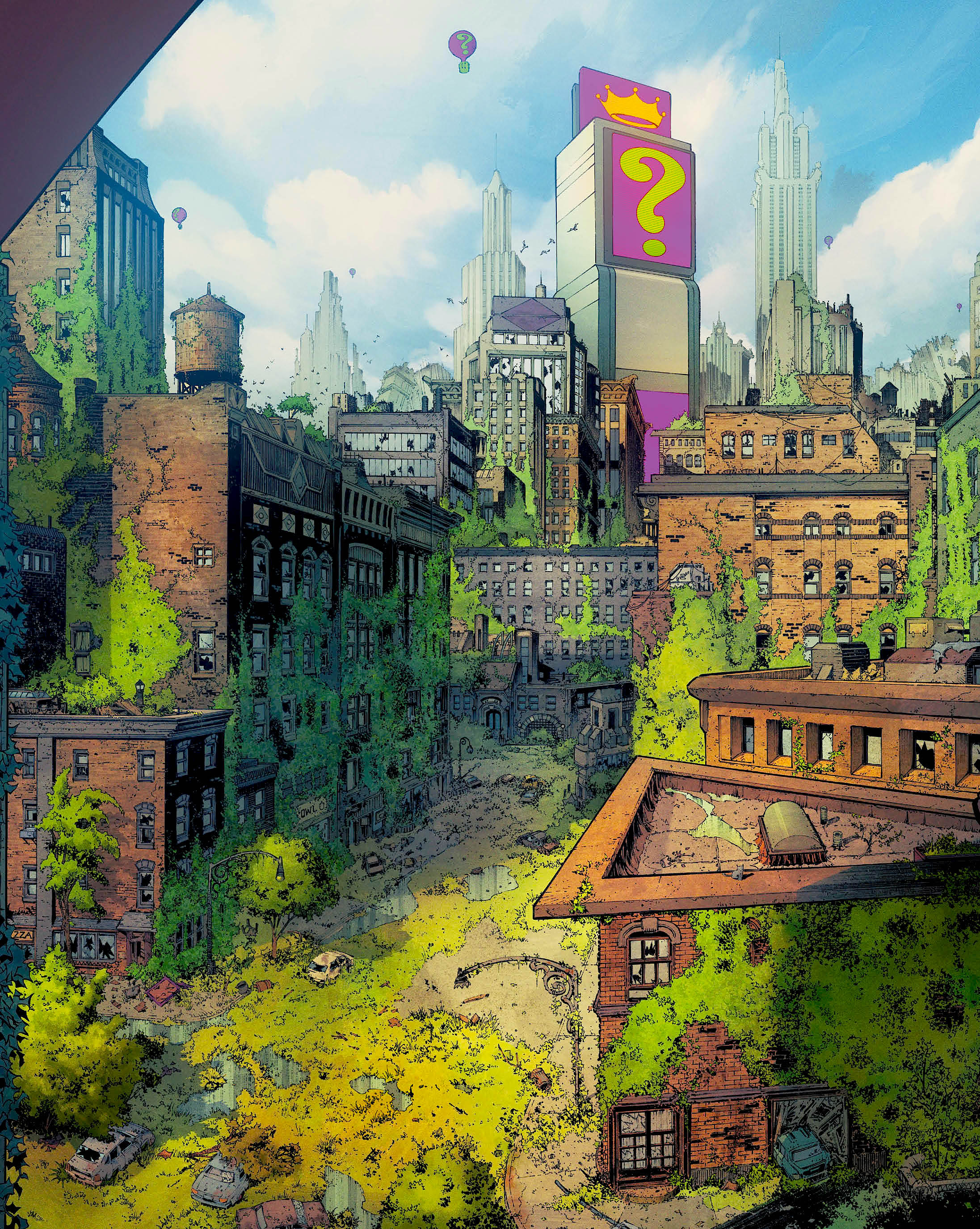
Gotham City is transformed into a post-apocalyptic jungle during “Zero Year”
According to the recent cannon established by DC’s “New 52″ reboot, during Batman’s early days as a hero Gotham City was taken over by the Riddler, who used stolen technology to completely control the city’s infrastructure systems. Not only that, but he used a stolen formula developed by the scientist Pamela Isley ,who would become the super-villain Poison Ivy, to transform the city into a jungle-like, post-apocalyptic wilderness. This period in the Gotham City’s history came to be known as “Zero Year”.
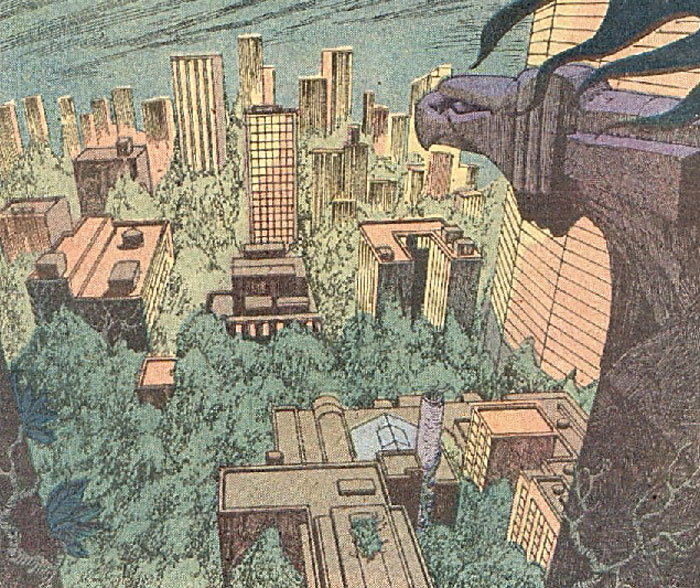
Gotham City is transformed into a forest in Swamp Thing no.53 (1986)
The transformation of Gotham City during Zero Year reminds me of a story from Alan Moore’s run on Swamp Thing ( Swamp Thing no.53, 1986 ), during which Gotham City was transformed into an overgrown jungle. In “The Garden of Earthly Delights,” Gotham City has been taken over by trees, vines, plants, moss, and every other imaginable type of flora. The city was overrun by Swamp Thing, who was taking vengeance against the city for imprisoning his wife. Batman is called and attempts to meet with Swamp Thing, but is defeated in a brief battle.
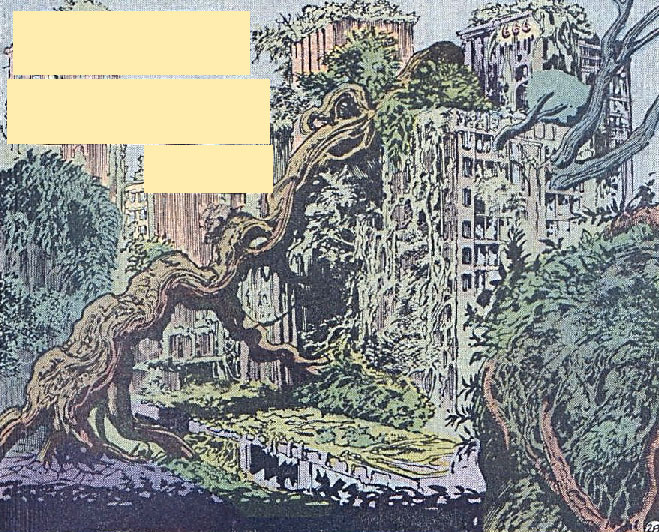
Gotham City is transformed into a forest in Swamp Thing no.53 (1986)
Swamp Thing continues to escalate his attack, further strengthening his hold on the city, transforming it into a veritable Garden of Eden and some citizens of Gotham City begin to worship Swamp Thing. As Commissioner Gordon says, Swamp Thing gave Gotham “a taste of some sort of savage Eden. Some people out there are acting as if it’s a natural-born paradise…but all I can see is a green hell.”

Gotham City is transformed into a forest in Swamp Thing no.53 (1986)
The story also established, for the first time, the origin of Gotham City, which was founded by a Norwegian mercenary.
]]>
Arkham asylum was first created by Dennis O’Neil in 1974. He named the asylum after a town in the stories of horror writer H.P. Lovecraft. Lovecraft originally created Arkham as an apocryphal analogue of Salem, Mass. The Lovecraft story, “The Thing on the Doorstep” features the Arkham Sanitarium. Though today Arkham is portrayed as a psychotic madhouse and/or high security prison, in the early days of Arkham Asylum in comics, it had a slightly more whimsical vibe. For example, the Joker kept a full functional lair beneath the asylum – his own skewed version of a batcave.
Lovecraft’s inspiration was likely the The Danvers State Hospital, also known as the State Lunatic Hospital at Danvers, The Danvers Lunatic Asylum, and The Danvers State Insane Asylum, was a psychiatric hospital located in Danvers, Massachusetts. Built in 1874 and opened in 1878, the hospital was designed by Boston architect Nathaniel Jeremiah Bradlee on an isolated, rural site according to the Kirkbride Plan .
While the asylum was originally established to provide residential treatment and care to the mentally ill, its functions expanded to include a training program for nurses in 1889 and a pathological research laboratory in 1895. In the 1890s, Dr. Charles Page, the superintendent, declared mechanical restraint unnecessary and harmful in cases of mental illness. By the 1920s the hospital was operating school clinics to help determine mental deficiency in children. Reports were made that various, and inhumane shock therapies, lobotomies, drugs, and straitjackets were being used to keep the crowded hospital under control. This sparked controversy. During the 1960s as a result of increased emphasis on alternative methods of treatment, deinstitutionalization, and community-based mental health care, the inpatient population started to decrease.
Massive budget cuts in the 1960′s played a major role in the progressive closing of Danvers State hospital. The hospital began closing wards and facilities as early as 1969. By 1985, the majority of the original hospital wards were closed or abandoned. The Kilbride administration building closed in 1989. Patients were forced out to live on the streets abruptly and were given less than optimal future care. The entire Danvers State Hospital campus was closed on June 24, 1992. After abandonment, the wards and buildings were left to decay and rot for many years until the demolition.



 [The cover to
Batman: Death by Design
]
[The cover to
Batman: Death by Design
]
What if Bruce Wayne wanted to demolish Penn Station in order to surreptitiously construct an auxiliary Batcave beneath the new building? That, in essence, is the plot of Chip Kidd’s new graphic novel Batman: Death by Design. Though a few familiar faces –and grins– make an appearance, Death by Design is, for better and worse, a comic book about architectural preservation and the construction industry.
 [left: Boston Avenue Methodist Church; center & right: sketches of Wayne Central]
Of course, there is no Penn Station in Gotham City. Instead, a thinly-veiled proxy is presented in the form of Wayne Central Station. Every action, every conflict, and every single character in this story is motivated by the desire to either preserve or demolish this building, which is part high rise, part train station, and part Tower of Babel. Because it plays such a central role in
Death by Design
, artist Dave Taylor did a lot of research before finalizing its design. His choices are inspired. The exterior of Wayne Central is drawn from the Boston Avenue Methodist Church in Tusla, Oklahoma, designed by Adah Robinson and
Bruce Goff
. With a little chiaroscuro, the Art Deco building fits perfectly into the Gothic-deco skyline of Gotham. The interior, however, is pure Penn Station. Designed by McKim, Mead and White in 1910, New York’s
Pennsylvania Station
was one of the greatest examples of Beaux-Arts Architecture in the United States. It’s destruction in 1963, and the subsequent construction of Madison Square Garden, sparked an re-evaluation of New York’s self-proclaimed “master builder”
Robert Moses

 [left: Wayne Central Station, Gotham; right: Pennsylvania Station, New York]
In a recent interview, Kidd described his experience with Penn Stations current subterranean incarnation:
“…as somebody who takes Amtrak a lot, I’m always in and out of Penn Station and it’s an absolute travesty. Basically — for one of the most active travel hubs on the east coast of the United States – it’s more or less is a fluorescent-lit airless basement below Madison Square Garden, and it’s just horrible. And almost as a cruel joke, when you’re down there, they have these pictures up on the grimy tiled walls of the old Penn Station – this big, glorious space. They’re hanging around on the walls practically mocking you with how beautiful it used to be, as opposed to how shitty it is now”
Kidd’s observation, shared by every single person who has ever been forced to set foot in that rhizomatic dungeon, brings to mind a remark by architecture historian Vincent Scully . In describing the transformation of Penn Station, Scully wrote something like “we used to enter the city like gods, now we scurry in like rats.” In Death by Design , Bruce Wayne hopes to replace his proxy Penn Station with a radical new design by noted European architect Ken Roomhaus –a proxy even even more thinly-veiled than Penn Station– so he can flutter in like a bat, or as the architect says, be “spat out onto the sidewalk.”
 [Ken Roomhaus and his design for the new Wayne Central Station]
In lieu of his usual bevy of supervillains, Death by Design presents Batman –and Bruce Wayne– with an unusual rogues gallery made up of a beautiful preservationist and an investigative architecture critic (of all the fantasies in Death by Design , “investigative architecture critic” is perhaps the most unbelievable). The cast is rounded out by devious contractors, reclusive architects, and a mysterious new costumed vigilante named Exacto – as in knife. Kidd has described Exacto as “Batman villain as architecture critic,” though that’s not quite right. He’s more of a proactive agent of the building department. Exacto makes his debut by warning dancers on a glass-floored nightclub high above the streets of Gotham: “The stresses on this structure were improperly calculated!” Along with incorporeality and teleportation, Exacto’s superpowers seem to include unlimited access to classified construction documents and forged union contracts. As more and more construction accidents befall Gotham, its citizens are left to wonder: who is the mysterious Exacto? Is he causing these accidents or are his intentions purely to combat faulty construction? Those questions are only two of the many mysteries that drive the plot of Death by Death .
Unfortunately, there are too many mysteries: collapsing cranes, demolished buildings, the disappearance of a famous architect, and, for good measure, an old-fashioned kidnapping. The story’s ambitions are too great, and it fails to fulfill the promises it makes. Chip Kidd is famed as a graphic designer but this is his first foray into writing comics. Though he’s crafted a heroic, convoluted narrative that could have come out of The Fountainhead or Robert Moses era New York, at times his inexperience with the medium shows. The story is beautiful but flawed with a rushed ending and plot threads that seemed to get snipped too short. And while his enthusiasm for architecture is appreciated, Kidd creates an apocryphal architectural jargon that is completely awkward and unnecessary. Roomhaus’s work is alternately described as “Maxi-minimalism” and “Mini-maximalism,” while the clearly Art Deco Wayne Central Station is described as “the single best example of Patri-monumental Modernism in America.” These terms not only takes the story out of a fictional golden age and into a full-on alternate dimension but also undermine the extensive research done by the book’s writer and artist, whose stunning drawings make up for any shortcomings. Taylor took his stylistic cues from Kidd, who as the story’s “art director” gave his artist a mandate that can be summed up on one very specific question: “What if Fritz Lang had a huge budget to make a Batman feature film in the 1930?” Indeed, many set pieces and entire scenes seem in Death by Design seem to be drawn straight from Lang’s Metropolis .
 [left: Batman fights through a crowd in Death by Design; right: a scene from Fritz Lang’s
Metropolis
]
[left: Batman fights through a crowd in Death by Design; right: a scene from Fritz Lang’s
Metropolis
]
A massive debt is also owed to the work of 1920s-1930s architectural renderer
Hugh Ferriss
. Ferriss’s renderings were the inspiration for
Tim Burton’s vision of Gotham City
and subsequently shaped the image of the city in the comics as well. Taylor’s pencils evoke Ferriss’s renderings without being derivative. The black and white monolithic Art Deco buildings of Gotham place the story firmly in the era of Ferriss’s iconic and much sought-after renderings. It also reveals, in surprisingly detail, the difficulties of getting such massive skyscraper builts in a city like Gotham or New York. To make sure this process was described realistically –as realistically as possible in a story involving teleporting masked vigilantes– Kidd consulted with friend and architect
Bart Voorsanger
. Artist Dave Taylor
notes
:
“The book contains some of the truth behind how a city is built, literally. The corruption, and misplacement of power rings true to the point of making this book a timely record. But what this book does above all is show how easy it can be to bring that corruption and power down, all you need is one hero!”
Even with its the overwrought plot,
Death by Design
is an entertaining paean to Batman and to architecture that wears its heart firmly on its cape. It really is exciting to see architecture presented as the driving force of a comic book plot instead of just background scenery. The Architecture of Gotham has always been integral to the Batman myth (
As I’ve previously noted
), and Kidd and Taylor articulate that connection in an exciting and innovative way. Buildings are represented heroically and heroes are revealed to be mere men, struggling against the very city they created.
 [Batman soars above Gotham City in
Batman: Death by Design
]
[Batman soars above Gotham City in
Batman: Death by Design
]
Death by Design also alludes to larger questions about architecture, important questions. What makes a monument? How can we preserve tradition while still embracing innovation? What is the value of an architect’s legacy? To some, it may seem silly to look toward comics for these answers, but Batman has been around since 1939 and his history has been not only preserved, but enriched and updated for a modern audience – even when it takes the form of a retro-pulp story. If Batman has taught us anything, it’s that the past invariably shapes who we are. It cannot and should not be forgotten or ignored, for by looking to the past we can certainly find timeless lessons that shape the people we are and the cities in which we live. But we cannot dwell on the past completely; we cannot let it consume us. In order to truly resonate with a contemporary audience, an expression of tradition must reflect current social and technological realities. It’s like I’ve always said: as goes Batman, so goes architecture.
[portions of this post originally appeared on Life Without Buildings ]
]]>


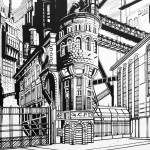
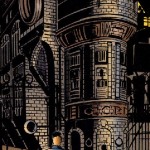

Having survived the Pinkney bombings , the Gotham earthquake, and No Man’s Land , the Gotham City Police Department Headquarters is one of the oldest and most resilient landmarks in the city. Located in Old Gotham, the Cyrus Pinkney -designed building serves as the primary headquarters for the dedicated officers of the Gotham City Police Department. Though the building has seen many attacks from vandals, criminals, and super-villains, it is always rebuilt to continue upholding the law and order in a city embattled with crime and corruption.
]]>
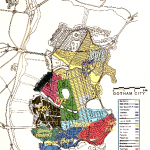
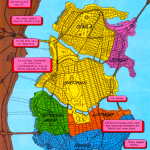


The Gotham earthquake was the worst on its kind in recorded East Coast history. It measured 7.6 on the richter scale and was centered in the Spillkin Hill area of Bristol Township about 10 to 20 miles north of the city center. Worse still, mosts buildings in Gotham had not been properly prepared for the possibility of such quakes, since nothing similar had ever been experienced on the East Coast. The only ones left standing were those owned by Wayne Enterprises and the Wayne Foundation, thanks apparently to what had seemed like an eccentric decision by Bruce Wayne and CEO Lucius Fox.
By the time the death toll of the Gotham earthquake had reached one million, the city had already been written off in the hearts and minds of many U.S. citizens. As roads and rail lines connecting Gotham to the rest of the United States were slowly reopened to traffic, the collapse of Gotham picked up even more steam as its citizens evacuated en masse. Soon after, a combination of an executive order and Congressional statute effectively rendered Gotham legally nonexistent. It forced the evacuation of almost all remaining citizens from the Core Islands. It also ordered the permanent confinement of those Gotham residents with criminal records, as well as the destruction of all known bridges and tunnels linking Gotham with the mainland by the U.S. Army. Anyone who remained –whether by federal order, choice of conscience, or simple lack of the means to leave– was stripped of their United States citizenship. The river was mined; the airspace patrolled by plane and helicopter. Anyone trying to get in or out of the Gotham islands risked a summary death sentence.
As Bruce Wayne, Batman had left the city to try and solve the problem politically, using his name and money to convince the federal government to belay closing off Gotham. Unfortunately, his efforts failed, arguably because he appeared to the government as Bruce Wayne–an air-headed millionaire with little concern for serious issues–of which the No Man’s Land was exemplary. The Supreme Court subsequently aggravated the atrocity by narrowly approving the No Man’s Land Declaration as constitutional. The vote was five to four, the majority upholding the Declaration despite the obvious case for nullifying it on the grounds that it violated several Constitutional amendments. Reversing the decision would take the better part of a year.
Some one-hundred days after the Federal Declaration of the No Man’s Land, Bruce returned to Gotham to reclaim the Batman title and his people, many of whom had long since given up on him. Even his former partner, Jim Gordon, believed that Batman had abandoned Gotham to the Arkham escapees. The city had been transformed into an almost medieval feudal state. The next year saw a constant, a life-or-death struggle for the future of Gotham and for the citizens left behind. With edicts condign convicts, former convicts, and the inmates of Arkham Asylum to the Gotham islands, the rest of the remaining inhabitants were reduced to reinvented feudalism of a sort that echoed the worst days of Beirut and Sarajevo. “Lords of the Sectors” ruled the new Gotham – urban warlords whose sovereign territory was measured in square blocks and who would be informally crowned, throned, and dethroned with alarming and savage regularity. Not all these warlords were evil, though. Among them was James Gordon. Gordon had chosen to remain behind to make sure that some sort of order, if not law, would return and prevail until the Declaration was rescinded. Many members of the Gotham City Police Department stayed as well.
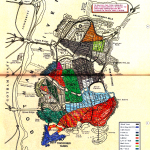
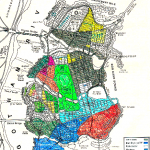
Much of what is known about the events of No Man’s Land is due to the records kept by Oracle, who, without the benefit of advanced technology, used her resources to become a low-tech version of herself. She used paper to document events and the passage of time, operatives and emergency phones (knowing which ones were still in operation) to gather intel, and colored maps (see above images) to keep track of who controlled which portions of the city at a particular time. Her maps were frequently shown in the comics to help the reader follow the progression of territorial disputes. In fact, so crucial were these maps to the storyline that DC Comics created the definitive map of Gotham City for No Man’s land. This map was even used to create the Gotham of Christopher Nolan’s Batman films.
Meanwhile, in the world outside Gotham, the backlash against the No Man’s Lad Declaration was already underway. Lobbying by corporate interest groups and human rights organizations, spearheaded by Wayne Enterprises and the Wayne Foundation, slowly but steadily reached a fever pitch over the next 10 months. The tide finally became irreversible by Day 312 because of two factors. The first factor was Timothy Drake. The teenage son of local industrialist Jack Drake recently returned to the Gotham Heights area of Bristol; Timothy had reportedly taken a dare from classmates and somehow beat all obstacles to break into the Gotham islands with no more than the clothes on his back and a cell phone. When Timothy let his father know what he’d done, it set off political dynamite all the way to Washington. Th U.S. Marshals Service rescue mission into the city to retrieve young Timothy was the least of the reaction to the far that there were still children living inside the “No Man’s Land.” The second factor was Lex Luthor’s entrance into the anti-No Man’s Land camps. He publicly defied the White House and Congress, damning the No Man’s Land Declaration as an immoral law that he refused to obey. Luthor personally flew into Gotham’s Grant Park on Day 312 to set up “Camp Lex” as his headquarters for the restoration efforts. He dared Washington to either arrest him or rescind the No Man’s Land Declaration. Unbeknownst to anyone at the time, Luthor’s plan was to secretly gain ownership of the entire city. However, this plan was foiled after Batman recovered original documents from Gotham’s archives that proved Lex Luthor committed fraud in his attempted acquisition. Luthor left Gotham after the discovery.
On Day 332 the White House finally bowed to the pressure now coming from all sides as a result of the Drake rescue and Luthor’s challenge. It conditionally rescinded the No Man’s Land Declaration. Gotham City would be restored to the United States of America on New Year’s Day, provided basic services could be restored to at least one-quarter of the Gotham islands by that date. Answering the call were LexCorp, S.T.A.R. Labs, Wayne Enterprises, the Wayne Foundation, and three brigades of the United States Army Corps of Engineers, among many others. The challenge given by the White House was not only met, but exceeded. On New Years’s Day, Gotham City rejoined the United States of America. From then on, the rebuilding of Gotham began in earnest. Known as the “Billion Dollar Buildup”, it was the biggest Federal Works Project since before World War II.
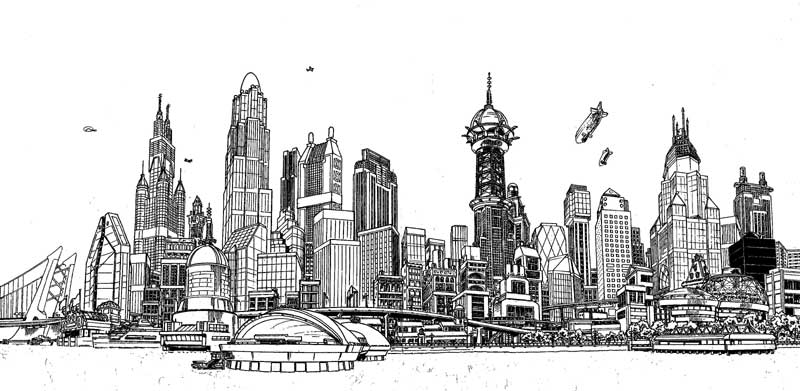
Those who returned to Gotham after the days of No Man’s Land were a more resilient, resourceful, and cynical populace. The built a more dramatic and varied architecture, with an influx of new locals adding to the rebuilding of the city. The Gotham envisioned during the reconstruction scarcely resembled the Cyrus Pinkney -influenced towers of old Gotham. While still distinctly recognizable as Gotham, the new skyline was brighter by night than what was ever previously envisioned by Solomon Wayne, who would likely not recognize this new city but who, if his last words are to be believed, would likely approve of the new city.
[This history of No Man’s Land is largely excerpted from
The Daily Planet Guide to Gotham

]]>
“Originally I was going to call Gotham City ‘Civic City’. Then I tried ‘Capital City’, then ‘Coast City’. Then I flipped through the New York City phone book and spotted the name ‘Gotham Jewelers’ and said, ‘That’s it,’ Gotham City. We didn’t call it New York because we wanted anybody in any city to identify with it.”
Gotham City could be anywhere.
Of course, “Gotham” had long been a well-known nickname for New York City – even prior to Batman’s introduction in 1939, which explains why “Gotham Jewelers” and many other businesses in New York City have the word “Gotham” in them. The nickname was first popularized in the nineteenth century. It was first used in print by Washington Irving in the November 11, 1807 edition of his Salmagundi , a periodical which satirized New York culture and politics. Irving took the name from the village of Gotham, Nottinghamshire, England, a place that, according to folklore, was inhabited by fools. The village’s name derived from Old English “gat” –meaning “goat”– and ham –”home”. So the name “Gotham” literally means the “homestead where goats are kept.” And it was originally pronounced “goat-em”. However, “Gotham” has taken on entire new meaning now and is more closely associated with the Gothic architecture that gives the city its dark, moody, and often dangers ambiance – more goth than goat.
In Detective Comics #880, the Joker mentions to Batman that Gotham means “heaven for goats”.
[some of the above information via wikipedia ]
]]>View Larger Map
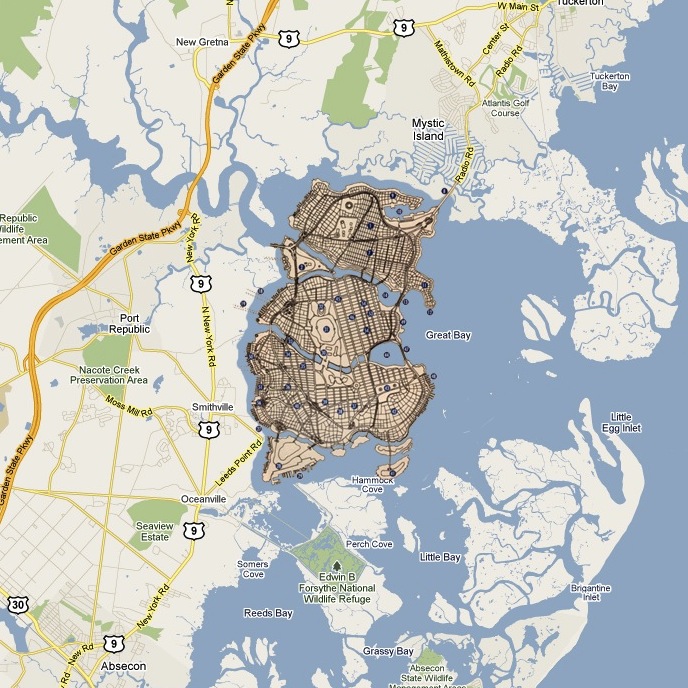
Where is Gotham City? Short Answer: New Jersey.
Here’s a clever fan rendering suggesting how Gotham might be integrated into the Garden State.
Longer answer:
The Atlas of the DC Universe , created in 1990 for a Role-playing Game, included a rare map of the American in DC Comics. Included on the East Coast of this map was Metropolis (in Delaware) and, of course, Gotham City – found on the coast of New Jersey. Here’s the map from the atlas:
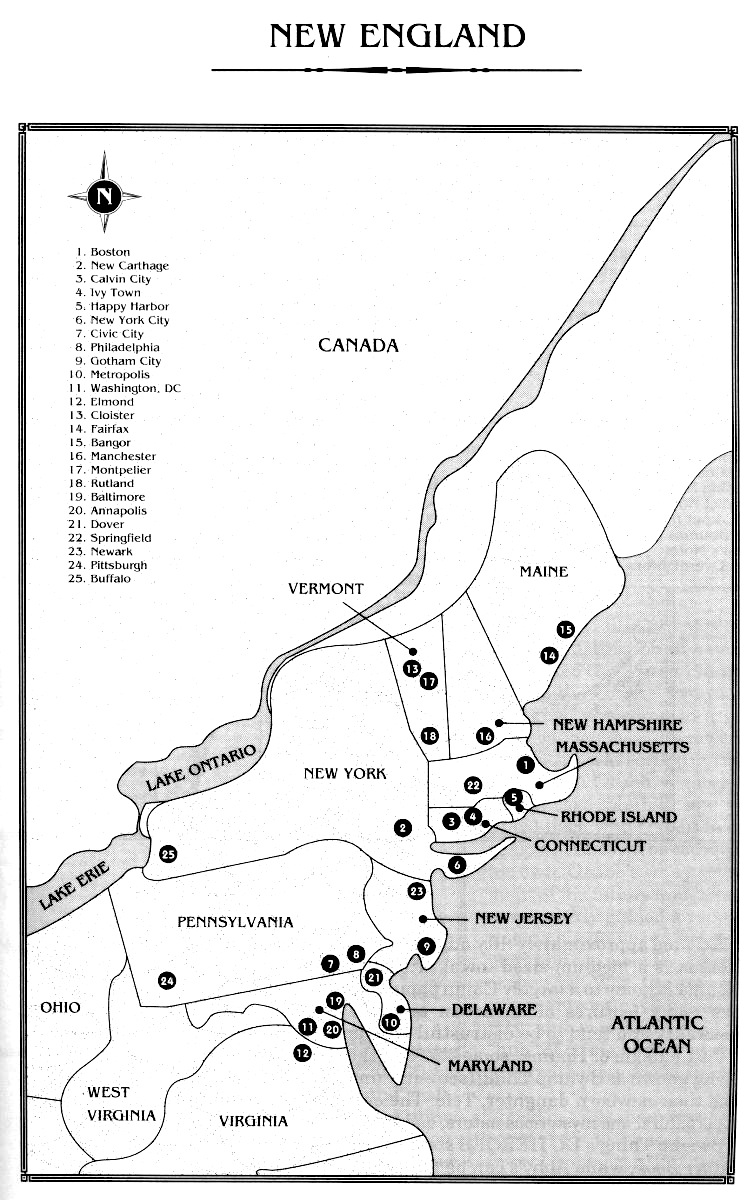
Though officially licensed by DC Comics, this source may no longer be endorsed by the company but there is some more direct evidence in the pages of the comics themselves. Detective Comics #503 (1983) includes several references suggesting Gotham City is in or near New Jersey. A location on the Jersey Shore is described as “twenty miles north of Gotham.” Robin and Batgirl drive from a “secret New Jersey airfield” to Gotham City and then drive on the “Hudson County Highway.” Hudson County is the name of an actual New Jersey county. Slightly more recently, a Gotham City driver’s licence shown in Batman: Shadow of the Bat annual #1 (1994), contains the line “Gotham City, NJ”, placing Gotham City in New Jersey. However, there surely exists a surfeit of evidence that could contradict or confuse the issue. But isn’t that the fun of comics? Personally, I’ve always loved this quote attributed to Frank Miller: “Metropolis is New York in the daytime; Gotham City is New York at night.”
For a full map of DC America, check out The Secret Geogrpahy of the DC Universe: A REally Big Map over at iFanboy.
[some of the above content via Batman wiki ]
]]>by Aristotle Rodor (Dennis O’Neil)
It is said that when Solomon Zebedia Wayne finished his first tour of Gotham Village, he gazed upward and mumbled a prayer of thanksgiving. He had found his home, his vocation, and the source of his eventual fortune. When young Wayne came to Gotham with a Harvard degree, a law book and a Bible, the settlement was languishing despite an almost ideal location, with the Atlantic Ocean on one side and an inland river on the other – the same kind of location that had already made Gotham’s neighbors, Boston, New York and Metropolis, powerful urban centers.
“There were a lazy lot,” Wayne later said of the Gothamites. “Oh, they were burdened with other vices too, among them a gluttony which they entertained so long as it did not require effort of them. They were also formidably stupid. But indolence was their primary sin. It was as though the whole of them were cursed with sloth. I feel, however, that with divine assistance, my gifts are ideally suited to bring about a blessed and beneficial change.”
Solomon prevailed on a classmate’s father to help him obtain a federal judgeship and then, with what a contemporary described as “zealous glee,” he began his campaign to reform Gotham. As a judge, he dispensed the harsh justice of an Old Testament patriarch and as an entrepreneur, he started a dozen businesses. Within six years, he was Gotham’s leading citizen, and its most posperous. But he was not satisfied.
“I feel that my efforts have been insufficient,” he wrote to an uncle in Boston. “There is here nothing of that focus of piety and industriousness that marks the mighty cities of Europe. Indeed, at times I feel that Evil Seeps into our precincts from the areas of Godless Nature which surround us, that the Dark One rides the winds that waft through our lanes from the corruption fo the woodlands, depositing lodes of Malice in our eaves and crannies.”
Solomon discovered what he believed to be Gotham’s salvation when he met Cyrus Pinkney, a young architect who appeared in his court as the victim of an assault. Pinkney, several years out of university and yet to find a commission, showed Judge Wayne his portfolio of sketches and plans, and found his patron. Pinkney’s vision coincided perfectly with Solomon Wayne’s. A few months later, in a speech to the Property Holders Association, Wayne asked “What is a city, gentlemen? A sanctuary! A stronghold! A fortress! A bulwark against the godlessness of the wilds wherein we may nurture the fits of Christian civilization and be protected from the savagery which lurks in untamed nature.”
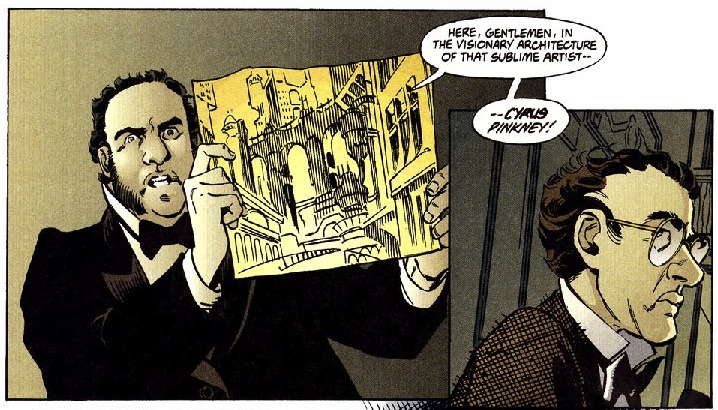
In Pinkey’s buildings, Wayne saw his fortress. He sold most of businesses, borrowed as much money as he could, persuaded anyone who would give him a hearing to do likewise and commissioned the first of the so-called “Gotham Style” structures to be built in what is now the center of the City’s financial district. Although vehemently criticzed by Wayne’s fellow Gothamites, the edifice pleased the judge and, in fact, was highly successful in that it attracted others to locate their ventures nearby – became, in fact, the focal point for a thriving commercial center. Together, Wayne and Pinkney raised no fewer than a dozen other, similar buildings. Pinkney’s style was, for a time, widely imitated, both in Gotham and elsewhere – this despite vilification from virtually every architectural journal in the world.
Pinkney died while still a young man, on the eve of his fortieth birthday. Solomon Wayne lived to be 104, long enough to see all his dreams realized; Gotham City became the busting hub of industry he had imagined. But it also became a haven for crime, known more for its poverty, the squalidness of its slums and the utter corruption of its government than for commercial and cultural achievements. On his deathbed, Solomon Wayne said, “I wished to lock evil out of men’s neighborhoods and hearts. I fear instead I have give it the means to be locked in.”
[Text excerpted from Batman Legends of the Dark Knight, No. 27: Destroyer, Part 2 ]
]]>As the world’s greatest detective begins to uncover the motives for the seemingly random guerrilla demolitions, he discovers another Gotham, “an older city, of improbable curves and angles – a city forgotten, that had been overshadowed and buried, suffocated by the towers of the 20th century.” Suddenly, in the type of realization that can only be expressed in with thought bubbles, the Caped Crusader understands the bomber’s motive. “He’s doing it…for art!”
Although it works quite well as an independent story, “Destroyer” is perhaps most notable as lead-in to Tim Burton’s first Batman film. By aggressively redesigning the skyline of Gotham, the Mad Bomber was conveniently creating a cityscape more comparable to the Gotham envisioned by Tim Burton. Thus, when new readers, attracted by the movie, pick up a Batman comic book, the Gotham City they see on the pages resembles the Gotham of the movie. The story was really all about attracting new readers and selling more comics.
The cover of each issue in the “Destroyer” series features a traditionally drawn Batman swinging in front of a harsh, black & white charcoal drawings of Gotham City. Drawings that channel the spirit of famed architectural delineator Hugh Ferris, filtered through the Carcerci etchings of Piranesi. Where Ferriss eschews detail for monumentality, the renderings of Gotham City by Academy Award-winning production designer Anton Furst, are bursting with a detail and chiaroscuro that put the “goth” in Gotham, creating an unmistakably Burtonesque world: shadowy Neogothic spires dripping with gargoyles and danger. It’s populace on the brink of insanity.
In the “Destroyer” storyline we learn that the religious fanatic architect Cyrus Pinkney was hired by the equally moralist Judge Solomon Wayne, an ancestor of Batman’s alter-ego, Bruce Wayne. For Solomon Wayne, a city should be a sanctuary, a fortress protecting culture and civility from the “godlessness of the wilds.” For Pinkney, Gotham needed structures to defend itself from the evil spirits responsible for corrupting man. Through a mystical epiphany, the Mad Bomber came to believe that Pinkney’s buildings literally kept “the demons” at bay. Cities have the power to effect the consciousness of its inhabitants and the ubiquitous gargoyles of the “Gotham Style” were intended to frighten people onto the path of righteousness.
Ferriss himself acknowledges such emotional and behavioral effects of architecture, saying in his book The Metropolis of Tomorrow, “it has been our habit to assume that a building is a complete success if it provides for the utility, convenience and health of its occupants and, in addition, presents a pleasing exterior. But this frame of mind fails to appreciate that architectural forms necessarily have other values than the utilitarian or even others than those which we vaguely call the aesthetic. Without any doubt, these same forms quite specifically influence both the emotional and the mental life of the onlooker. Designers have generally come to realize the importance of the principle stated by the late Louis Sullivan, ‘Form follows Function.’ The axiom is not weakened by the further realization that Effect follows Form.” Ferriss’ iconic and much sough-after renderings were specifically designed to communicate the emotional influence of architecture – not necessarily what the building is, but the power it has.
Through the filter of the bomber’s insanity, Batman is, ironically, seen as one of the demons corrupting the city. Indeed, as drawn in this series, Batman is a kind of expressionist demon; cloaked in shadows and violent movement of swirling of cape and cowl. But is he a demon, or is he a living manifestation of Gotham’s gargoyles? Of its stone protectors? A man shaped, perhaps unconsciously, by the gothic vaults and flying buttresses and monstrous sculptures of Cyrus Pinkney. A man who, like the city he protects, frightens the citizens onto the path of righteousness.
“Destoyer” closes with The Mad Bomber, ex-student / historian / Navy SEAL Andre Sinclair, surrounded by police and demolition crews, shooting defiantly at a wrecking ball swinging towards him. A futile, final act in defense of the individual dream against the unstoppable assault of society’s progress. As the wrecking ball rushes towards him, his earlier thoughts echo across the scene, “man is such a temporary thing. He lives, he sins, he dies. But a city can stand a thousand years. And a dream can last forever.” Unfortunately, the issue’s closing narration casts little hope for the nightmare that is Gotham City. “Cyrus Pinkney’s Gotham – gargoyles, to frighten people onto the path of righteousness – rounded edges to confuse the malevolent beings – thick walls to lock in virtue. The work of a madman!”
In fact, Gotham City really is the work mad men. First, a fanatically religious architect and his equally radical benefactor, who by shear force of will and moral certitude willed Gotham into existence in the hopes that the city would, in turn, will morality into its citizens. Then, years later, the Batman has his influence. Shaped by the perverse forms of the city itself, Batman has had as much effect on the psyche of Gotham as the spires and gargoyles of the city’s architect. Like Gotham, Batman is an indeal, a force of nature, an effect. But what effect is he having? Bruce Wayne’s ancestor realized too late that he may actually be responsible for the criminal fate of Gotham City. “I wished to lock evil out of men’s neighborhoods and hearts,” Solomon Wayne lamented on his deathbed. “I fear that instead I have given it the means to be locked in.” Let’s hope that his descendent doesn’t have the same regret.
So what came first, the city or the crime? the hero or the villain? The architect or the city?
In closing, another quote from Hugh Ferriss seems appropriate:
“The contemplation of the actual Metropolis as a whole cannot but lead us at last to the realization of a human population unconsciously reacting to forms which came into existence without conscious design. A hope, however, may begin to define itself in our minds. May there not yet arise, perhaps in another generation, architects who, appreciating the influence unconsciously received, will learn consciously to direct it?”
Text via Life Without Buildings
]]>